

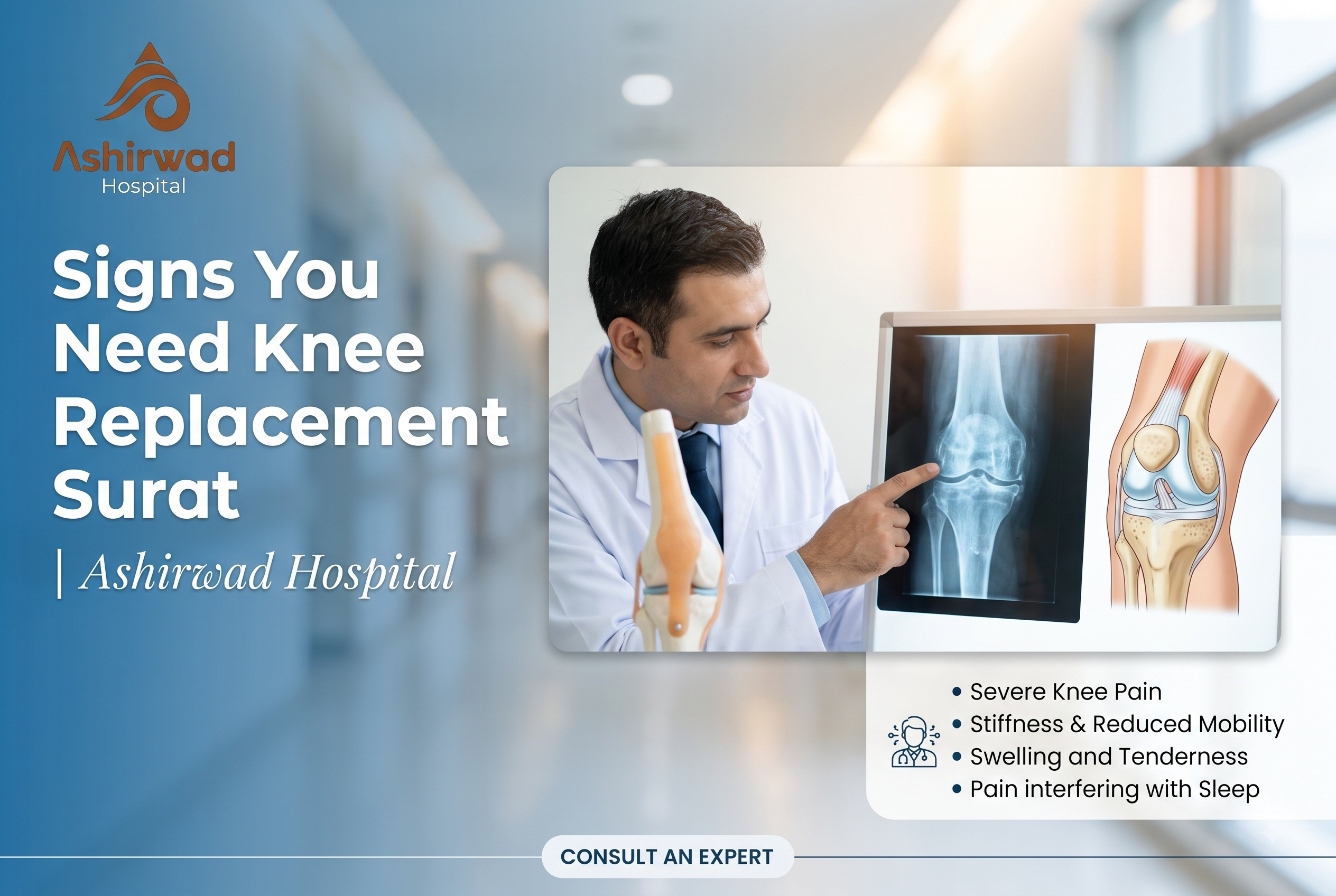
Knee pain that comes and goes is easy to shrug off. Knee pain that changes how you climb stairs, sit through a train ride to Udhna, or walk your kids to school in Vesu is a different problem altogether. Many patients at Ashirwad Hospital in Surat wait months, sometimes years, before asking whether their knee pain has crossed the line from “manageable” to “needs surgery.” This self-check is built to help you answer that question honestly, using the same signs orthopedic surgeons in Surat look for during a first consultation.
Run through the checklist below, be honest with yourself about how many apply, and bring your answers with you if you decide to visit Ashirwad Hospital for a proper knee or joint assessment.
Why Surat Patients Often Delay a Knee Replacement Evaluation
Surat’s pace of life doesn’t leave much room for slowing down. Diamond and textile workers spend long hours standing at cutting tables. Shopkeepers in Ring Road and Varachha climb stairs dozens of times a day. Home-makers in Adajan and Piplod manage stairs, kitchens, and grandchildren without a break. Knee pain gets treated as a normal part of getting older rather than a medical issue with a clear treatment path.
The problem with waiting is that knee joints don’t heal on their own once cartilage has worn away. Delaying an evaluation usually means more months of pain medication, more missed family functions, and a knee that has degraded further by the time surgery does happen. There’s also a practical cost to delay: the longer bone-on-bone contact continues, the more likely a surgeon is to recommend a more complex procedure than what would have been needed a year or two earlier, including addressing bone loss or correcting a deformity that has developed around the joint. An early, honest self-check changes that timeline.
The 8-Point Self-Check: Signs You May Need a Knee Replacement in Surat
Go through each sign and note whether it sounds familiar. This isn’t a diagnosis; it’s a starting point for a conversation with an orthopedic doctor.
1. Pain That Doesn’t Let Up, Even at Rest
Early arthritis pain shows up during activity and fades with rest. A knee that’s ready for replacement often aches even while you’re sitting, lying down, or trying to sleep. If ibuprofen or a hot water bag used to help and no longer does, that’s a meaningful shift. Pay attention to how the pain behaves across a full day rather than judging it by a single bad afternoon — arthritis pain tends to follow a pattern, not a one-off flare.
2. Stiffness That Makes Mornings Hard
Struggling to bend the knee fully after waking up, or after sitting through a long auto-rickshaw ride, points to joint stiffness caused by cartilage loss. If it takes several minutes of movement before the knee “loosens up,” the joint lining has likely thinned. Some patients describe this as the knee feeling “rusted” first thing in the morning, easing only after they’ve been on their feet for a while.
3. Swelling That Keeps Coming Back
Occasional swelling after a long day is common. Swelling that returns week after week, even with rest and ice, usually means the joint is inflamed from bone rubbing against bone rather than cartilage. If you notice the knee looks visibly puffier than the other one, or feels warm to the touch, that’s worth mentioning specifically during your consultation.
4. Grinding, Clicking, or Locking Sensations
A knee that grinds, clicks loudly, or briefly locks when you straighten it is showing mechanical wear. This symptom, known as crepitus, often means the smooth cartilage surface has broken down enough to leave rough bone-on-bone contact. A knee that locks in place, even briefly, and needs to be jiggled or repositioned to move again is a stronger signal than clicking alone.
5. Visible Bowing or Change in Knee Shape
Advanced arthritis can pull the knee out of alignment, causing a bowlegged or knock-kneed appearance that wasn’t there before. This is usually a sign the joint has been deteriorating for a while and is worth an X-ray. Family members sometimes notice this change before the patient does, since it develops gradually.
6. Daily Activities You Used to Manage Without Thinking
Climbing the stairs at home, getting up from the floor after prayer, or walking to the local market suddenly feel like a project. When the knee starts dictating your schedule instead of the other way around, that’s a strong signal. Watch for the smaller adjustments too — taking the lift instead of one flight of stairs, sitting on a chair for tasks you used to do on the floor, or asking someone else to fetch something from another room.
7. Medicines, Injections, or Physiotherapy Aren’t Helping Anymore
Pain relievers, steroid injections, and physiotherapy are meant to manage arthritis, not cure it. If these options gave relief for a while and have now stopped working, it usually means the joint damage has progressed past what conservative treatment can handle. This is often the clearest signal of all, because it shows a documented history of trying the non-surgical route first.
8. Knee Pain Is Affecting Your Sleep or Mood
Waking up at night because of knee pain, avoiding social events, or feeling low because you can’t do what you used to are quality-of-life signs orthopedic surgeons take seriously, alongside X-ray findings. Chronic pain that disrupts sleep also tends to make the pain itself feel worse the next day, creating a cycle that’s hard to break without treating the underlying joint problem.
If three or more of these sound familiar, it’s worth getting an X-ray and a professional opinion rather than waiting for the pain to become unbearable.
When Self-Checking Isn’t Enough — See a Doctor Right Away
Most knee pain builds gradually, which is why a self-check is useful. A few situations skip the checklist entirely and need same-day medical attention: a knee that suddenly locks and won’t straighten at all, a knee joint that becomes hot, swollen, and painful along with fever, sudden inability to bear any weight after a fall or twist, or visible deformity following an injury. These point to a possible fracture, infection, or acute ligament injury rather than gradual arthritis, and waiting for a scheduled consultation isn’t the right call in those cases.
What Happens at Your First Knee Consultation in Surat
An orthopedic evaluation at Ashirwad Hospital typically starts with a physical exam of your knee’s range of motion, followed by weight-bearing X-rays to check joint space and alignment. In many cases, an MRI is added if soft tissue damage is suspected. Based on these findings, the surgeon will explain whether your case fits conservative management, a partial knee procedure, or a full total knee replacement, and what recovery would look like in your specific situation.
Patients often want to know how the decision differs between traditional surgical methods and newer techniques. If that’s part of your research, this comparison of robotic vs conventional knee replacement answers the questions Ashirwad Hospital hears most often from South Gujarat patients.
How Long Recovery Takes After Knee Replacement
Recovery timelines worry patients more than the surgery itself. Most patients are up and walking with support within a day of surgery, using a walker for the first couple of weeks, and returning to light daily activity within six to eight weeks. Full recovery, including strength and flexibility, typically takes three to six months depending on age, weight, and how consistently physiotherapy is followed.
A detailed breakdown of what to expect in the days and weeks after surgery is covered in this week-by-week knee replacement recovery timeline, written specifically for patients recovering in Surat’s climate and home settings.
What Knee Replacement Costs in Surat
Cost is usually the second question after “do I really need this?” Pricing depends on the type of implant, whether one or both knees are involved, and whether the surgery is done under a government scheme such as Ayushman Bharat or paid privately. Ashirwad Hospital’s full price breakdown for 2026 walks through each cost component so there are no surprises before surgery.
Patients covered under the government health card can also read about Ayushman card coverage for total knee replacement in Surat to understand what’s included.
Why Patients Across South Gujarat Choose Ashirwad Hospital
Ashirwad Hospital treats knee and joint patients from across Surat neighborhoods including Adajan, Vesu, Piplod, Athwa, Rander, and Nanpura, as well as surrounding areas like Olpad, Palsana, and Hazira. The orthopedic team handles the full range of joint care, from partial knee replacement for early-stage damage to total hip replacement and complex revision total knee replacement for patients whose earlier surgery needs correction.
If you’d rather start with a general overview, the full range of care is listed under joint replacement treatment in Surat.
Your Next Step: Book a Knee Assessment in Surat
A self-check is a starting point, not a diagnosis. If you’ve recognized three or more signs above, the safest next step is a proper X-ray and consultation rather than waiting through another season of pain. Ashirwad Hospital’s orthopedic team reviews your knee history, checks imaging, and gives you a clear picture of whether physiotherapy, a partial procedure, or full replacement fits your situation — no pressure, just a straight answer.
Reach out through the Ashirwad Hospital contact page to book a knee assessment, or bring your completed self-check to your first visit so the consultation starts with facts instead of guesswork.
Frequently Asked Questions
At what age should I worry about needing a knee replacement?
Most patients considering knee replacement are between 50 and 70, but early arthritis, old sports injuries, or joint conditions can bring the need forward. Age alone doesn’t decide it; joint damage and daily impact do.
Can physiotherapy avoid the need for surgery?
In early and moderate arthritis, physiotherapy, weight management, and medication can delay or sometimes avoid surgery for years. Once cartilage loss is severe, physiotherapy manages symptoms but doesn’t reverse the damage.
Is knee replacement covered under Ayushman Bharat in Surat?
Yes, eligible patients can get knee replacement covered under the Ayushman Bharat scheme at Ashirwad Hospital. See the Ayushman card knee replacement guide for eligibility details.
How do I know if it’s arthritis or just normal knee pain from age?
Normal age-related aches tend to be mild, short-lived, and don’t affect daily function. Arthritis pain is persistent, often worse in the morning or after rest, and gradually limits activities you used to manage easily. An X-ray is the only way to know for certain.
What if only one knee hurts but the other feels fine?
Single-knee arthritis is common, especially after an old injury or years of uneven weight-bearing. A partial or total replacement can be done on one knee while the other is monitored separately, so there’s no need to wait until both knees are affected before seeking treatment.
Will I need to stay off my feet for months after surgery?
No. Most patients at Ashirwad Hospital are walking with a support frame within 24 hours of surgery and are back to light household activity within six to eight weeks. Staying immobile for long periods actually slows recovery, so early, guided movement is part of the treatment plan.
A Short Word on Taking the Next Step
Knee pain that has quietly reshaped your daily routine, your sleep, or your mood deserves more than another round of painkillers picked up at the local chemist. The self-check above isn’t meant to replace a doctor’s opinion; it’s meant to help you walk into that appointment already knowing what to describe and what questions to ask. Whether your knee turns out to need physiotherapy, a partial procedure, or a full replacement, getting an honest answer sooner rather than later is what keeps a manageable problem from turning into a limiting one.